
Temple Run 2: Endless Escape
Imangi StudiosAction
4.1368.88K Reviews
- Version
- 1.137.0
- Installs
- 1.00B
- Age Rating
- Everyone 10+
Screenshots
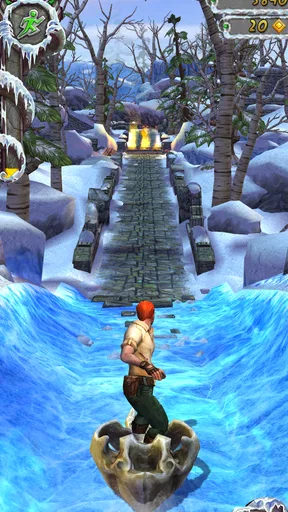
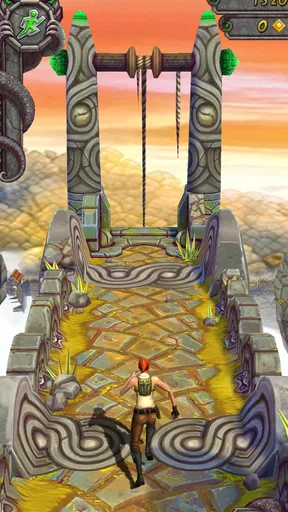
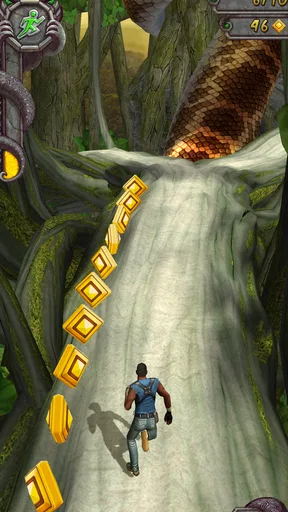
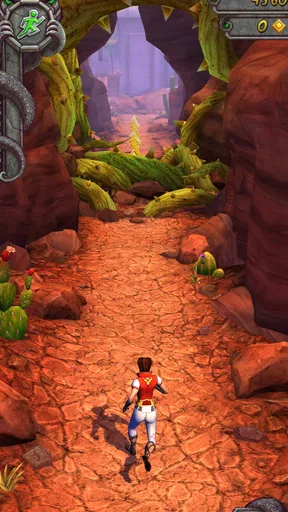
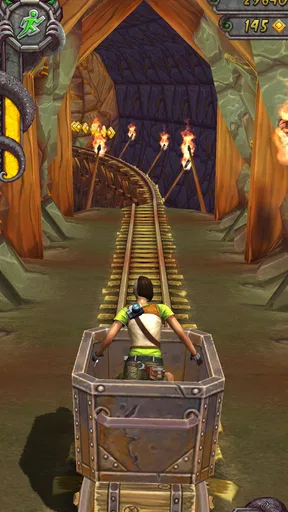
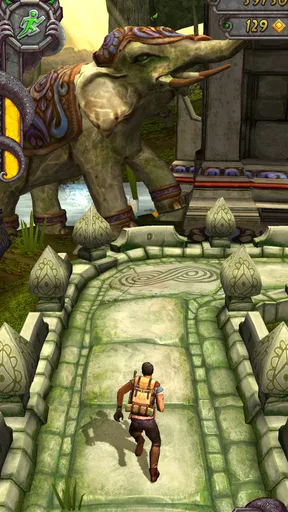
Our Review of Temple Run 2: Endless Escape
 Analysis by Appyee
My first impression of Temple Run 2: Endless Escape is of a game built around urgency: the path is always moving, a threat is always close, and the next turn arrives before I can settle into autopilot. That simple pressure still makes it an easy choice when I have a few spare minutes and want something active rather than a quiet puzzle. Imangi Studios has made an action game whose appeal is immediate, but its best quality is how its vivid setting and quick decisions work together.
A quick run that suits short breaks
I find it especially handy in the small gaps of an ordinary day: waiting for a friend, taking a short break, or sitting through a commute when I want a game I can understand at once. A run has a clear beginning and an abrupt end, so I can play without setting aside a long session or remembering a complicated story. The catch is that the chase encourages “one more try.” If I need to put my phone away at a precise moment, I should be ready to stop after a run rather than promise myself I will quit after the next obstacle.
The game is free to start, with in-app purchases priced from $0.99 to $49.99 per item. I would treat spending as optional rather than necessary: the basic appeal comes from learning the route and improving my reactions, not from buying my way through a run. The broad reach is striking, with more than a billion installs and an average rating of 4.1 from around 9.9 million ratings. Those figures make it one of the best-known mobile runners, though popularity alone does not guarantee it will suit someone who dislikes repetition.
How its jungle setting communicates
The world is easy to read at a glance. The temple, open stretches, cliffs, and rivers give the run a strong adventure-film feel, while the path itself keeps the practical information in front of me: I need to notice where to turn, when to jump, and when to slide. That balance matters on a small screen. The scenery makes the game feel like a place rather than a row of identical hazards, but it does not ask me to pause and admire every view while the chase is underway.
For me, the strongest visual choice is the contrast between spectacle and clarity. The backgrounds provide a sense of scale, while the immediate track remains the part I must read quickly. That helps the fantasy hold together without making each obstacle feel like decoration. The look is bright and lively, and it gives a run more character than a plain lane-based sprint. Still, this is a game about reacting to what is ahead, not exploring the jungle at a relaxed pace; anyone hoping for a slow, story-led adventure should look elsewhere.
Sound and the feeling of speed
The chase works best when I pay attention to the changing pace of a run instead of treating every moment as the same burst of speed. Sound and movement help give the action a continuous, adventurous mood, but my eyes do most of the work when a turn or hazard is close. I can enjoy the atmosphere without needing to follow a detailed plot, which is part of why the game is easy to pick up in short sessions.
That focus has a trade-off: repeated runs can begin to feel more like a test of concentration than a new adventure. If I want a game where music, dialogue, or a developing story is the main attraction, this is not my first recommendation. Here, the mood supports the chase rather than taking it over. I also find that the experience is most satisfying when I play with enough attention to anticipate obstacles; casually glancing at the screen while distracted makes quick mistakes more likely.
The Thrill of the Chase
Alright, let's talk about the core of Temple Run 2. It's all about the chase. You're running for your life, dodging obstacles, and collecting coins like your life depends on it. And in this case, it kind of does! The premise is simple but oh-so-addictive. You start off in a mystical temple, and let's just say, things don't go as planned. Cue the massive, angry beast chasing after you. Talk about motivation to run!
Graphics and Design
One of the first things that struck me about this game is its vibrant graphics. The developers really stepped up their game from the original. The lush landscapes, from zip-lining over rivers to navigating perilous cliffs, are stunning. It feels like you're part of a blockbuster movie, and the detail is just chef's kiss. It's amazing how they've managed to pack such visual detail into a mobile game.
That visual energy also explains why I would choose this over a stripped-back runner when I want a stronger sense of place. The scenery changes the feel of the sprint, even though the core task stays focused on survival and score. I would not, however, recommend it as a substitute for an open-world adventure: the route is there to be read and survived, not freely explored. Its spectacle is most useful when it makes a quick session feel lively, not when I expect the game to become a sightseeing tour.
Gameplay Mechanics
Now, onto the gameplay. The controls are intuitive and smooth, which is crucial when you're trying to dodge traps and make sharp turns. Swipe to turn, jump, and slide – it’s all in the thumb action. The game does a great job of gradually ramping up the difficulty, keeping you on your toes without feeling overwhelming.
There is a practical learning curve hidden inside that simplicity. I get more consistent when I watch the track a little farther ahead instead of reacting only to the nearest obstacle. On a turn, I try to make the swipe deliberate rather than adding extra movement in panic; when a jump or slide is coming, I give myself a moment to read the shape of the route. This does not remove the need for quick reflexes, but it makes mistakes feel more useful: I can identify whether I misread a cue or simply reacted too late.
The controls also make the game approachable for someone who has not played many mobile action games, but they are not a reason to play while distracted. A thumb swipe is simple to learn; judging the next few seconds of a fast run is the real skill. I would skip it if I find repeated reflex challenges frustrating, or if I want deep tactical choices that remain the focus throughout a session. Compared with slower puzzle games, this asks for attention in bursts; compared with other endless runners, its appeal is the mix of responsive swipes and cinematic jungle scenery.
The power-ups are another highlight. From shields to coin magnets, they add a layer of strategy. Knowing when to use them can make the difference between a successful escape or a quick demise. Plus, there's the added excitement of discovering new locations as you progress, each with its unique challenges and secrets.
A useful way to think about a power-up is as a decision about the run I want, not just a button to press whenever it appears. If I am trying to stay alive, a defensive advantage matters more than chasing every coin; if I am focused on collecting, a coin-focused boost fits that goal better. I also avoid letting coins pull my attention away from a safe line through a difficult section. The small trade-off is that collecting and surviving can compete with each other, so a run feels more controlled when I choose my priority before the pace gets intense.
Characters and Customization
Variety is the spice of life, and Temple Run 2 delivers with its range of characters. Each character has unique abilities that can be unlocked, adding a fresh twist to the gameplay. The customization options are a neat touch too. You can switch up characters’ outfits and abilities, making it feel personal and fresh every time you play.
For a new player, I would focus on learning the basic movement before worrying about which character or ability is the best fit. Customization can make the game feel more personal, but it does not replace practice with turns, jumps, and slides. Once the controls feel familiar, changing a character or ability can be a reason to approach a run differently. If I prefer a single fixed setup and do not care about unlocks, this layer is easy to treat as optional rather than a requirement for enjoying the chase.
Replay Value and In-Game Purchases
The replay value of Temple Run 2: Endless Escape is insanely high. It’s one of those games you can pick up anytime, anywhere. The daily and weekly challenges keep things interesting, and if you're the competitive type, there are leaderboards to climb. It's easy to see why this game has such a dedicated fan base.
That variety gives me a reason to return when a normal run starts to feel familiar: I can give myself a particular goal instead of treating every session as a repeat attempt at a better score. Challenges suit players who like a prompt, while leaderboards make more sense for someone who enjoys comparing performance. I would not make either the main reason to install it if competition feels stressful. The game works just as well as a personal reflex test, and a short session can still feel complete without turning every result into a ranking.
The game is rated Everyone 10+ and was released on January 23, 2013. Its current version is 1.131.0, and it requires Android 6.0 or later. I would check that operating-system requirement before trying to install it on an older Android device. With 374,000 reviews alongside its much larger rating count, it has clearly stayed part of mobile gaming conversation over time, but the most useful question for me is simpler: do I still enjoy repeating a run to get a little better at reading the path?
As for in-game purchases, yes, they're there, but the game is generous with its rewards. You can enjoy a full experience without spending a dime, though a few purchases might speed up your progress if you're impatient (like me).
Where it fits—and where it doesn’t
When I compare it with the usual alternatives in the endless-runner category, I see a clear choice: this one is for players who want a vivid adventure backdrop wrapped around quick, familiar swipe decisions. A minimalist runner may be easier to read and better for someone who wants the cleanest possible visual field. A puzzle or platform game may be a better pick when I want deliberate pauses, more precise control, or a sense of finishing a designed level. This is strongest when I want motion, a readable route, and a reason to try again after a short run.
It is also a poor fit for anyone who dislikes restarting after a mistake or who expects each session to unfold like a new chapter. The endless structure is the point, but it means progress is measured through better runs, challenges, and personal goals rather than a conventional story ending. If I am tired, rushed, or playing in a distracting setting, I would choose something less dependent on instant reactions. If I have a few focused minutes, its compact loop is much easier to recommend.
A mood that keeps the chase coherent
All in all, Temple Run 2: Endless Escape is a must-try for any mobile gaming aficionado. It's thrilling, visually stunning, and endlessly rewarding. Whether you’re killing time or going for a high score, this game delivers on all fronts. So, lace up your virtual sneakers and get ready to run like your life depends on it. Happy escaping!
My recommendation is more specific: I would suggest it to a friend who likes quick action, striking jungle scenery, and the satisfaction of improving through repetition. I would steer a friend toward a calmer or more story-driven game if they want a slower pace, a clear ending, or less pressure to react. The atmosphere is not separate from the mechanics; it gives the chase its adventurous flavor, while the constant need to read the route keeps that flavor playable. That balance is why I still find it an easy game to pick up, even when I know the next run may end in a familiar way.
Privacy and Permissions
See what permissions an app requests and how it handles your data.
- Photos/Media/Files
- read the contents of your USB storage, modify or delete the contents of your USB storage
- Storage
- read the contents of your USB storage, modify or delete the contents of your USB storage
- Wi-Fi connection information
- view Wi-Fi connections
- Other
- view network connections, full network access, control vibration, prevent device from sleeping, Google Play license check, read Google service configuration
How Temple Run 2: Endless Escape Compares
Full ComparisonChoose Temple Run 2 for jungle-escape thrills, Subway Surfers for colorful city runs and missions, or Talking Tom Gold Run for a kid-friendly chase with character customization.
| App | Developer | Rating | Price |
|---|---|---|---|
 Temple Run 2: Endless EscapeThis App | Imangi Studios | 4.1 | Free |
 Subway Surfers | SYBO Games | 4.6 | Free |
 Talking Tom Gold Run | Outfit7 Limited | 4.3 | Free |
Verdict
Strengths of Temple Run 2: Endless Escape
- Stunning graphics and smooth animations.
- Variety of characters and abilities.
- Engaging and addictive gameplay.
- Easy controls for quick learning.
- Frequent updates with new content.
Limitations of Temple Run 2: Endless Escape
- Repetitive gameplay can get monotonous.
- In-app purchases can be pricey.
- Occasional lag on older devices.
- Limited storyline depth.
- Ads can interrupt gameplay.
Other Releases by Imangi Studios
View All
Temple Run
Arcade4.2
Similar Picks in This Category
View All
PUBG MOBILE
Level Infinite4.3

Free Fire: 9th Anniversary
GARENA INTERNATIONAL I4.4

Talking Tom: Hero Dash Run
Outfit7 Limited4.3

slither.io
Lowtech Studios3.9

Sniper 3D:Gun Shooting Games
Wildlife Studios4.6

Worms Zone .io - Hungry Snake
CASUAL AZUR GAMES4.3
You May Also Like
View All

Frequently Asked Questions
What are the main features of Temple Run 2: Endless Escape?
Temple Run 2: Endless Escape offers an exhilarating experience with enhanced graphics, new environments, and additional obstacles compared to its predecessor. Players can enjoy new power-ups, character abilities, and special achievements. The game also features multiple characters and landscapes, providing a fresh twist to the classic endless runner gameplay.
Is Temple Run 2: Endless Escape free to play?
Yes, Temple Run 2: Endless Escape is free to download and play on both Android and iOS platforms. However, it offers in-app purchases for players who want to enhance their experience by buying additional coins, gems, or unlocking special abilities and characters. These purchases are optional and not required to enjoy the game.
What are the device requirements for Temple Run 2: Endless Escape?
Temple Run 2: Endless Escape requires a device running Android 4.4 or later and iOS 9.0 or later. It is compatible with most modern smartphones and tablets. The game is optimized to run smoothly on devices with at least 1GB of RAM, ensuring a seamless gaming experience with minimal lag.
How does Temple Run 2: Endless Escape compare to the original Temple Run?
Temple Run 2: Endless Escape builds upon the original Temple Run by offering improved graphics, more diverse environments, and additional gameplay mechanics. The sequel introduces new obstacles, power-ups, and character abilities, enhancing the overall player experience. Fans of the original will appreciate the fresh challenges and updated aesthetics.
Can I play Temple Run 2: Endless Escape offline?
Yes, Temple Run 2: Endless Escape can be played offline. Players can enjoy the core gameplay without an internet connection. However, some features, such as in-app purchases and certain updates, require an internet connection. Playing offline ensures you can enjoy the game anywhere, anytime.
Play our best games!


